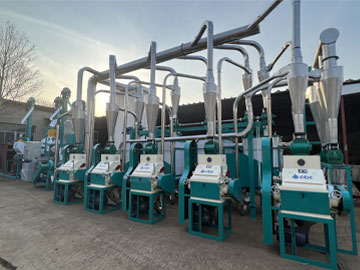
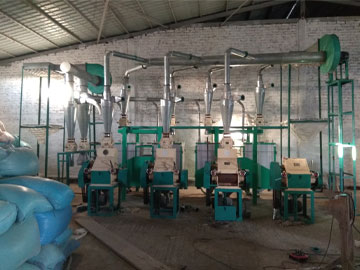
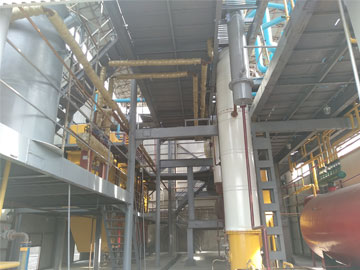
ABC Machinery provided a complete 100 TPD soy protein isolate production line for a soy protein isolate plant in Uzbekistan. This report gives the figures a buyer needs before equipment selection: the mass balance of the soy protein isolate plant, the control parameters and acceptance criteria of each section,and the scope a supplier should cover across the soy protein isolate production process.
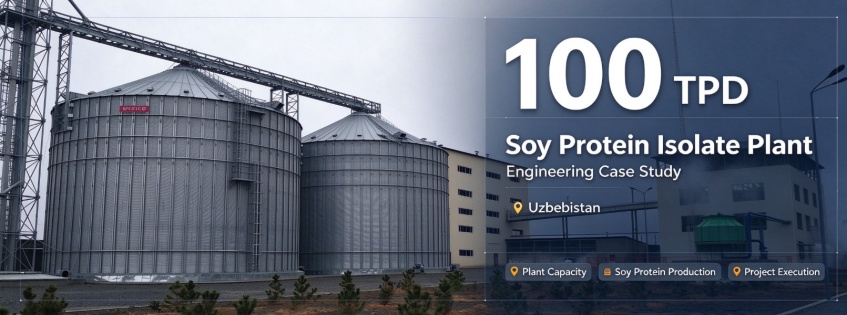
Quick answer: five production sections operating at deliberately different capacities. The 100 tonnes per day designation applies to soybean intake at the soy protein isolate plant, not to protein powder output.
| Item | Detail |
|---|---|
| Project location | Uzbekistan |
| Product | Food-grade soy protein isolate (SPI) |
| Raw material | Non-GMO soybean |
| Production sections | 5 — pretreatment and dehulling; low-temperature extraction; protein wet section; separation; drying |
| Pretreatment and dehulling | 100 t/day — the rated soybean intake of the soy protein isolate plant |
| Low-temperature solvent extraction | 80 t/day at the soybean oil extraction plant |
| Process water treatment | 50 t/hour — approx. 12 t of water per tonne of soybean |
| Boiler | 2 t, 4 t and 20 t, matched to the drying load |
| Separation route | Alkali dissolution and acid precipitation |
The rated capacities fall in one descending sequence, because hulls, oil, fibre and process water leave the material stream at successive stages. That sequence is what makes the capacity of a soy protein isolate processing plant different from the capacity of any single machine inside it.
| Stage | Rated capacity | Material removed or produced |
|---|---|---|
| Pretreatment and dehulling | 100 t/day | Hull fraction of approx. 7–8% of intake, plus moisture |
| Low-temperature extraction | 80 t/day | Soybean oil recovered, and low-temperature desolventised soybean meal produced |
| Protein wet section | 50 t/hour process water | Water consumed as a process reagent in alkaline dissolution and acid precipitation |
| Protein and fibre separation | 10 t/day fibre | Food-grade dietary fibre split off as a separate product stream |
| Drying | Up to 6,500 t/year isolate | Water removed by flash evaporation and by the protein spray dryer |
Comparing soy protein isolate plant cost requires a section-by-section quotation, a mass balance and an explicit statement of the guaranteed recovery figure. Asked for that way, the soy protein isolate plant supplier has to show where the losses sit instead of quoting one impressive number. It is also what makes soy protein isolate plant cost defensible in front of a lender or an investment committee.Contact us to get free and professional answers immediately.

Quick answer: four working groups, each with a different dominant failure mode. Pretreatment governs extraction efficiency, extraction governs protein solubility, the wet section governs purity and yield, and drying governs the energy requirement. The full soy protein isolate production line specification lists them with their capacities.
The table below summarises the principal process parameters for the soy protein isolate production line. All entries are standard industry reference ranges, given with units, and are not guaranteed values for this or any other project: final figures must be established by material trial on the actual incoming soybean and confirmed during commissioning.
| Section | Parameter | Reference range | Function |
|---|---|---|---|
| Pretreatment | Cleaning barriers on the soybean cleaning equipment | 3 successive stages | Sieving, destoning and magnetic separation ahead of flaking. |
| Conditioning moisture | 10–12% | Creates the separation layer between hull and cotyledon before dehulling. | |
| Flake thickness | 0.25–0.35 mm | Primary variable for solvent penetration; excessive thickness raises residual oil, insufficient thickness produces fines. | |
| Hull fraction removed | 7–8% of intake | Hull must leave as a separate stream; recirculation raises fibre load and dilutes protein content. | |
| Extraction | Residual solvent in meal | Food-grade limit; contract value | Compliance limit for food-grade meal; the specific figure is agreed in the supply contract. |
| Protein content of low-temperature meal | Approx. 48–52% | Determines the protein load reaching the wet section; verified by assay of the incoming bean. | |
| NSI of desolventised meal | ≥85% | Solubility ceiling for the whole soy protein isolate production line; principally controlled by desolventising temperature and dwell time. | |
| Wet section | Alkaline extraction pH | 8.5–10.5 | Controls extraction rate; excessive pH introduces colour and deamidation problems. |
| Alkaline extraction temperature | 50–60 °C | Affects extraction rate and microbiological load. | |
| Liquid-to-solid ratio | 1 : 8 – 1 : 15 | Sets extraction efficiency against downstream evaporation load. | |
| Isoelectric precipitation pH | 4.3–4.6 | Isoelectric region of soy protein; pH control precision directly determines protein content and yield. | |
| Drying | Dryer inlet air temperature | 180–200 °C | Sets evaporation capacity and particle formation. |
| Dryer outlet air temperature | 80–95 °C | Controls final powder moisture in combination with feed concentration. | |
| Finished powder moisture | ≤7.0% | Consistent with the product specification; governs storage stability. |
Objective: convert whole soybean into clean, hull-free flakes of uniform thickness. Governing variables: conditioning moisture and flake thickness — the performance ceiling for the entire soy protein isolate production line is set at this stage.
Cleaning (sieving, destoning, magnetic separation): stones and ferrous scrap must be removed before flaking, across three successive barriers.
Conditioning and softening: controlled water and heat addition establish the separation layer between hull and cotyledon. Target moisture is 10–12%.
Dehulling: approximately 7–8% of the incoming soybean leaves as hull, and it must leave as a discrete stream. Hull carried into the protein line simultaneously increases the fibre load and dilutes protein content, so the cost of inadequate hull handling is incurred twice.
Flaking: target flake thickness is 0.25–0.35 mm, the primary variable in extraction performance. The soybean flaking machine setting is therefore established by trial on the actual bean rather than from a nominal roll gap.
Configuration in this project: 100 t/day of soybean intake, with dedicated hull storage rather than recirculation of hulls into the process.
ABC Machinery: turnkey project design for this section starts from an assay of the incoming soybean — moisture, protein, oil and imperfect kernel content. Cleaning stages, softening conditions and flake thickness are derived from that assay and confirmed during commissioning, rather than applied from a standard drawing.
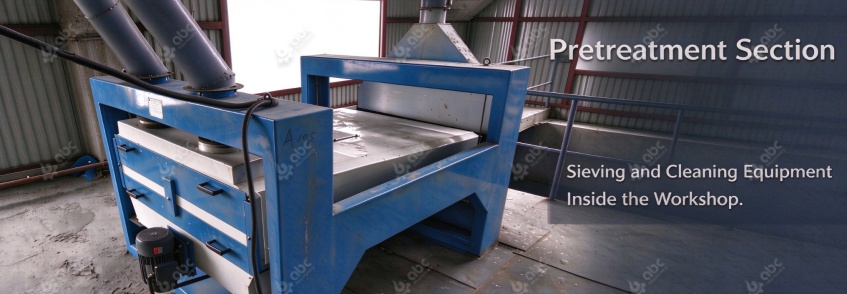
Workshop Sieving and Cleaning Equipment for Soybean
Objective: recover the oil content without degrading the solubility of the protein that remains. Governing trade-off: desolventising temperature and dwell time — the harder the meal is desolventised, the lower the residual solvent and the lower the NSI.
Extraction: solvent dissolves the oil out of the flake at a rated 80 t/day. Bed depth, percolation and residence time determine the residual oil figure, which in turn determines the oil value recovered by the soybean oil extraction plant.
Desolventising: mechanical desolvation, negative-pressure evaporation and dry desolventising are applied in combination. More severe desolventising pushes residual solvent below the food-grade limit but increases thermal damage to the protein and lowers the NSI, which is capped at ≥85%.
Solvent recovery: the recovery rate is simultaneously a cost item, a safety parameter and an environmental parameter, and is one of the few figures a buyer can audit directly from consumption records.
Output: low-temperature desolventised soybean meal, the feedstock for the soy protein isolate plant. Its protein dispersibility sets the limit on what the wet section can achieve.
Configuration in this project: 80 t/day, below the 100 t/day pretreatment capacity because oil, hull and moisture have already been removed.
ABC Machinery: extraction and desolventising are engineered as a single continuous section rather than two separate contracts. Specifying the soybean protein isolate equipment under one contract is what makes that possible. Acceptance criteria cover residual solvent in the meal together with protein solubility, rather than throughput alone, which is the figure most favourable to the supplier and least informative to the buyer.
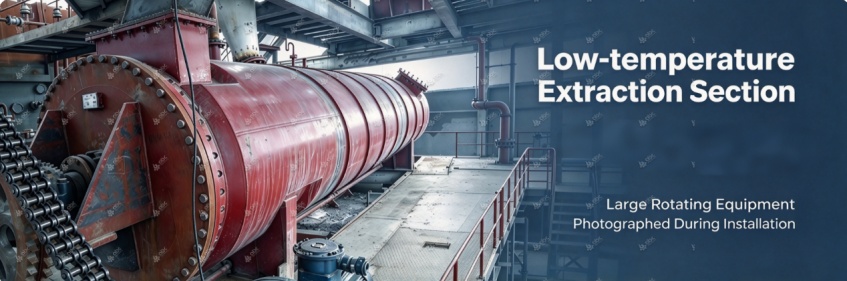
Low Temp Extraction Large Rotating Processing Equipment
Objective: dissolve the protein out of the meal and recover it from solution as a purified precipitate. Governing variable: pH. This is the only section of the soy protein isolate plant whose control level determines protein purity, and it consumes 50 t/hour of treated process water.
Process water treatment (rated 50 t/hour, approx. 12 t per tonne of soybean): alkaline dissolution and acid precipitation both occur in solution, so water functions as a process reagent. Hardness and dissolved ions in the supply alter acid and alkali consumption and are ultimately reflected in the ash content of the finished powder, for which the upper limit is 6.0%.
Alkaline dissolution: protein solubility increases with pH, so extraction rate is determined jointly by pH (8.5–10.5), liquid-to-solid ratio (1 : 8 – 1 : 15) and temperature (50–60 °C). The soy protein extraction equipment must therefore hold pH within a narrow band across the full production rate.
Acid precipitation: pH is reduced to the isoelectric region of soy protein, 4.3–4.6, at which solubility falls sharply and the protein precipitates. The precision of pH control at this stage is the most direct operational determinant of the protein content stated on the product certificate.
Neutralisation and homogenisation: pH is restored to neutral and the slurry homogenised to provide a stable, uniform feed to the dryer. Inconsistent feed at this stage appears downstream as fluctuating powder moisture.
Cleaning system: designed for a high-viscosity, readily fouling product. The cleanability of the wet area determines continuous run length, changeover time and, in a plant producing food-grade soy protein isolate, bacteriological control.
ABC Machinery: the wet area is designed as one system, with the chemical balance, the washing cycle and the hygienic layout resolved simultaneously, so the soy protein isolate production process is fixed at design stage rather than adjusted on site. The soy protein extraction equipment in this area is then commissioned against that same pH band.
Objective: separate protein from fibre and remove the remaining water. Governing variables: atomisation quality and steam supply — this section accounts for the majority of the soy protein isolate plant's energy consumption.
Protein and fibre separation: centrifugal separation divides the protein stream from the food-grade dietary fibre fraction, rated at 10 t/day — a product stream with its own specification, not a waste stream for disposal.
Flash evaporation: a substantial proportion of the water is removed ahead of the dryer. This is the lowest-cost dewatering step in the soy protein isolate plant: each tonne of water removed here is a tonne the protein spray dryer does not have to evaporate with steam.
Spray drying: inlet air temperature (180–200 °C), feed concentration and atomisation quality jointly determine particle size, bulk behaviour and final moisture (80–95 °C outlet, ≤7.0% in the powder). Drying constitutes the largest thermal load in a soy protein isolate production line, which is why boiler capacity — 2 t, 4 t and 20 t in this project — is determined by the drying tower rather than by soybean intake.
Cyclone separation and packing: powder is collected, classified and packed. Fine powder carried over in the exhaust represents lost product, so cyclone efficiency is a yield parameter rather than an operational detail.
ABC Machinery: the wet and dry areas are engineered as one continuous flow, because the interface between them — dewatering ahead of drying — largely determines both protein loss and specific energy consumption. Dividing the two areas between separate suppliers commonly results in a protein spray dryer sized for a feed it does not receive.
Quick answer: a food-grade soy protein isolate is assessed on nine indicators together. Protein content is the commercial headline, but NSI, ash and fineness determine whether the powder performs in the customer's application.
| Parameter | Target | Why it is on the list |
|---|---|---|
| Protein | ≥90% (dry basis) | The commercial basis of the product; a lower figure changes the inclusion rate in the customer's formulation. |
| Moisture | ≤7.0% | Above this level storage stability and flow behaviour decline, and the protein spray dryer is operating below specification. |
| Fat | ≤1% | Indicates incomplete extraction; residual oil shortens shelf life through oxidative rancidity. |
| NSI (nitrogen solubility index) | ≥85% | The functionality indicator. Low NSI indicates thermal damage; the protein will not emulsify or retain water irrespective of the protein figure. |
| Ash | ≤6.0% | Reflects mineral load, principally from process water and pH adjustment chemicals; the indicator most frequently lost to an untested water supply. |
| pH | 7.2 ± 0.2 | Confirms neutralisation is under control and that the product behaves predictably in the customer's mix. |
| Water and oil absorption | 1 : 4 : 4 | The functional performance purchased by a meat processor. |
| Fineness | ≥95% through 100 mesh | Determines dispersion, mouthfeel and uniformity of dosing. |
| Total bacteria count | ≤30,000/g, no pathogens | The qualification gate for food-grade use; a function of soy protein isolate plant hygiene and cleaning design rather than of laboratory practice. |
From Soybean to Soy Protein Isolate: the Sections Documented on Site
Quick answer: twelve process sections are documented, covering the full route from plant yard and raw material storage through extraction, the wet protein area, fibre separation and drying to the boiler and auxiliary systems. Two of the photographs below were taken during installation and are captioned accordingly.
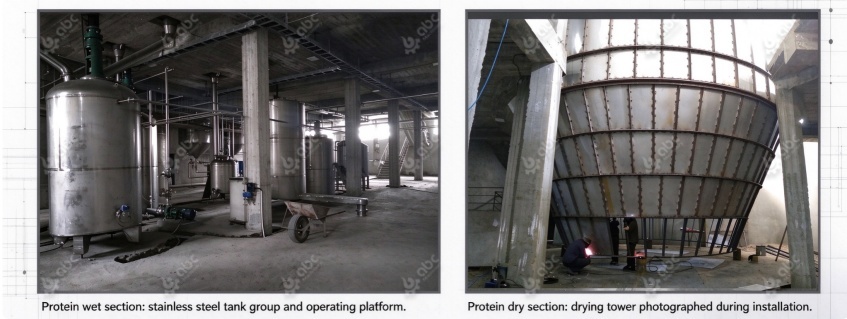
Soy Protein Plant Wet Tanks and Drying Tower Under Installation
ABC Machinery provides turnkey project design for soy protein isolate production, the design scope covers a turnkey soy protein isolate plant from raw material intake through to packed powder.As a soy protein isolate plant supplier, ABC Machinery has exported equipment to India, Kazakhstan, Tajikistan, Sri Lanka, Indonesia, Saudi Arabia and other markets.
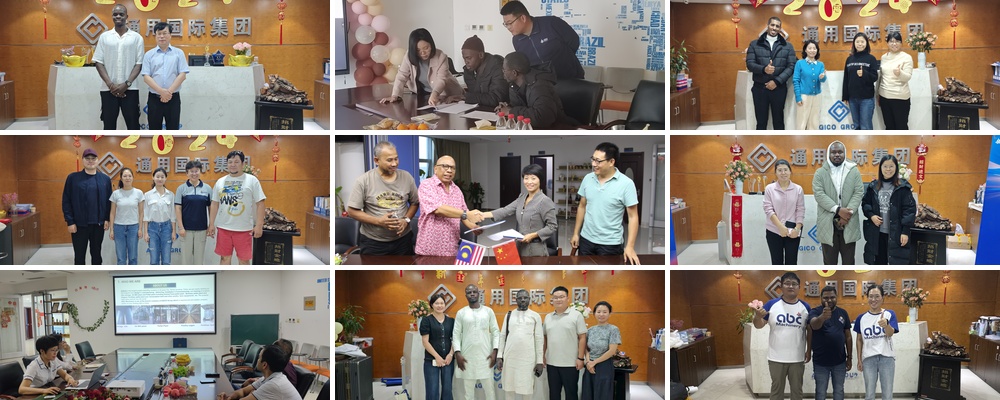
Global Flour Milling Machine Investors Visiting ABC Machinery
If you are planning a turnkey soy protein isolate plant, four items of information are sufficient for our engineers to return a process route and equipment scope: raw material source and type; target product and specification; target daily intake capacity and intended operating days per year; and site conditions such as water source and quality, available fuel or steam, and building space. Our engineers will respond with the soy protein isolate production process route, core technical parameters and indicators for your case, and a quotation, by email, phone or WhatsApp.
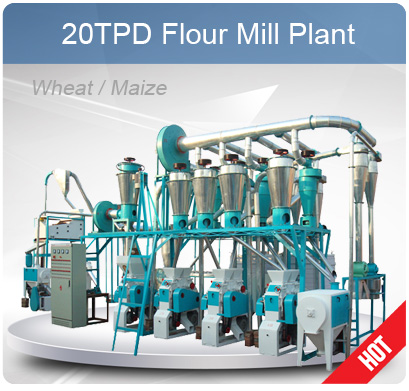
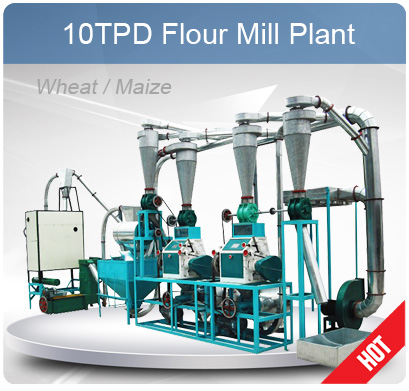
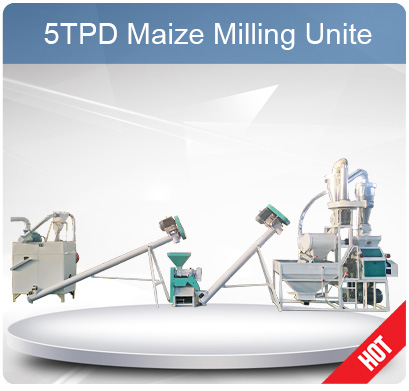
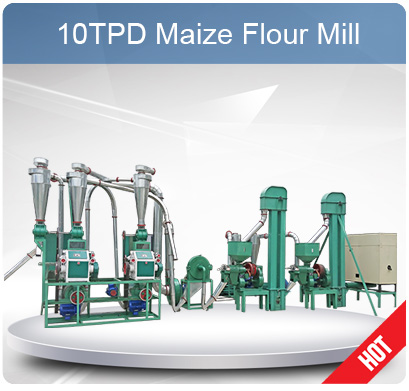
ABC Machinery provided a complete 100 TPD soy protein isolate production line for a soy protein isolate plant in Uzbekistan. The line processes Non-GMO soybean through five production sections pretreatment and dehulling, low-temperature ext...
Recently, the mayor of a city in Zimbabwe visited a local maize processing plant project. The plant is the latest cooperation project between ABC Machinery and our Zimbabwean client. All the highly efficient maize mill machines for the maiz...
Zambia 2024 is coming up with AGRITECH EXPO ZAMBIA exhibition at GART Research Centre, Chisamba (April 18th to April 20th) . ABC Machinery will be participating in this years Exhibition. We cordially invite you to visit our booth (A19) and...